2803 (HKD) | 9803 (USD)
A multi-factor approach to capture high quality contributors to China's real economy growth
3173 (HKD) | 9173 (USD)
Capture new economic engines in consumer, technology, healthcare sectors in a multi-factor approach
3151 (HKD) | 83151 (RMB) | 9151 (USD)
Leading technological innovation-based companies listed on the SSE STAR Board
3181 (HKD) | 9181 (USD)
An efficient solution to capture digital transformation, robotics & automation, and healthcare & life science innovations in Asia
2810 (HKD) | 9810 (USD)
A low cost building block capturing the leading powerhouses in Malaysia, Thailand, Indonesia, the Philippines and Vietnam
2804 (HKD) | 9804 (USD)
Efficient, in-time-zone access to capture exponential growth opportunities from Vietnam equities in a single trade
2817 (HKD) | 82817 (RMB) | 9817 (USD)
9177 (USD)
Unique, transparent and low-cost tool to conveniently access Long Duration China Government Bonds
3001 (HKD) | 83001 (RMB) | 9001 (USD)
First SFC authorized high yield bond ETF to capture attractive USD yield from a diversified basket of secured and senior USD China property bonds
3077 (HKD) | 9077 (USD)
9078 (USD)
Cash management tool with daily liquidity, minimal duration exposure, US treasury credit quality and little counterparty risk
3411 (HKD) | 9411 (USD)
Cash management tool with daily liquidity, minimal duration exposure, US treasury credit quality and little counterparty risk
3453 (HKD)
9159 (USD)
An efficient solution to capture digital transformation, robotics & automation, and healthcare & life science innovations in Asia
3478 (HKD) | 9478 (USD)
Asia's first ETF offering convenient access to Saudi Arabia government sukuk market through a one-ticker trade
주요 인사이트 & 웨비나

With US technology stocks under pressure from high valuations and risk-off sentiment from high beta trades amid heightened global market volatilities given geopolitical tensions, China advanced tech sector offers a well-supported and timely alternative for investors looking to diversify. The numbers speak for themselves: over the past two years, the hardcore technology focused STAR50 Index gained 77.3%, comfortably ahead of the Nasdaq's 40.2%. China has put innovation at the core of its long-term growth plan, with strong government backing for AI, semiconductors, and advanced manufacturing. Under Beijing’s domestic substitution policy, Chinese companies are rapidly replacing foreign technology with homegrown solutions, and earnings forecasts are being revised higher. In this article, our Partner & Co-CIO David Lai discusses the policy signals emerging from China's 15th Five-Year Plan and explores how investors can tap into these opportunities through our Premia China STAR50 (3151 / 9151 / 83151 HK) for focused exposure to China's leading hardcore technology companies, as well as our Premia China New Economy (3173 / 9173 HK) that provides broader coverage across nearly 300 holdings spanning the full new economy landscape.
Apr 08, 2026

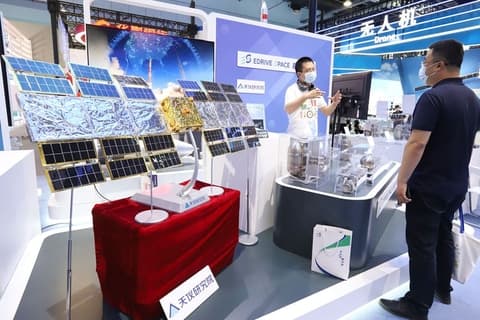
Last December China launched a major national venture capital fund, a national guidance fund and three large regional funds (Beijing-Tianjin-Hebei, Yangtze River Delta, Greater Bay Area), all designed to channel billions of development capital into "hard technology" sectors like semiconductors, AI, and biomedicine to fast track its trajectory to overcome the current choke points and achieve technology independence amid persistent geopolitical tension. Meanwhile, Bloomberg reported that China is also considering a US$70 billion package of incentives to boost its semiconductor industry. These are only the latest in a string of boosters: China had already announced numerous measures over the past two years, estimated to value almost US$100billion, to lift capabilities in its chip sector. In this article, we reviewed China's ongoing efforts in the global chip race, and how under rapid acceleration in domestic substitution across cutting-edge logic chips, memory foundries, and AI models, our China New Economy (3173 / 9173 HK) and China STAR50 (3151 / 9151 / 83151 HK) strategies are uniquely positioned to capture these structural opportunities.
Apr 08, 2026

Despite last year’s pronounced rally in onshore Chinese stocks, the fourth quarter saw strong rotation from growth plays to a value theme, leading to divergence in the Bedrock and New Economy strategies over the final few months of the year. That said, we note all three of the Premia China ETFs showed marked outperformance over broad market, as investors continued to pivot to hardcore technology and strategic new economy sectors notwithstanding profit taking and risk-off sentiments towards the year end. In fact, under strong tailwinds such as domestic substitution policies, China’s economic engine is being reconfigured as many of these emerging leaders started to show fast tracked earnings growth and profitability. With this background, CSI Caixin Rayliant New Economic Engine Index (tracked by Premia China New Economy ETF - 3173 / 9173 HK ETFs) outperformed CSI300 solidly with total gain of 23.9% for full-year 2025, while China STAR50 index (tracked by Premia STAR50 ETF - 3151 / 9151 / 83151 HK ETFs) delivered even stronger full-year return of 36.5% notwithstanding the end of year profit taking. Meanwhile, as Low Risk, Value, Quality factors advanced in Q4, as a defensive strategy in risk off environment CSI Caixin Rayliant Bedrock Economy Index (tracked by Premia China Bedrock Economy ETF - 2803 / 9803 HK ETFs) outperformed the broader market with a gain of 4.9% for the quarter, bringing its full-year return to 12.6%. In this article, Dr. Phillip Wool, Global Head of Research of Rayliant Global Advisors, discussed the macro and factor-level influences, and provided a concise summary of contributors to China A share performance in Q4 2025 and possibly into 2026 as we kick start the first year of the 15th Five Year Plan.
Mar 16, 2026
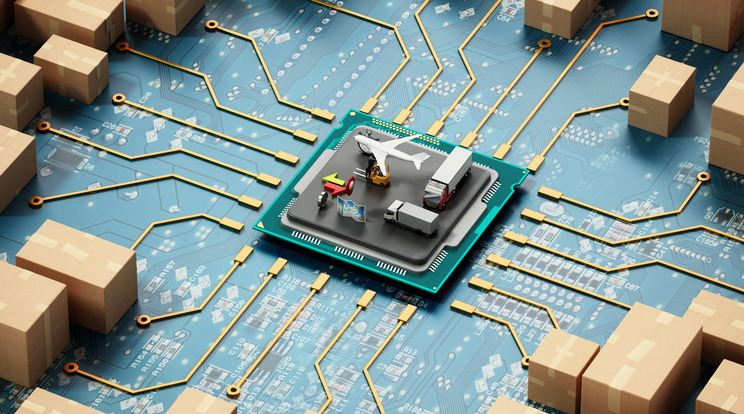
With many of the global leading high tech manufacturing players, the Taiwan stock market sits at the confluence of the global tech super cycle, robust earnings growth and modest valuations, and is home to many global leading Asian technology players. The fundamental tailwinds that drove the Taiwanese stock market’s outperformance from 4Q25 are likely to continue carrying the rally in 2026. Indeed, the Taiwan market appears to be in the early stages of its outperformance cycle. In this article, our Senior Advisor Say Boon Lim explores why in addition to TSMC, the blue chip cohort from Taiwan offers global investors a unique diversification opportunity, providing exposure to technology super cycle beyond US big tech names, complemented by its attractive valuations and low correlations with other major asset classes.
Feb 02, 2026

Analysts including JP Morgan, Goldman Sachs, Morgan Stanley, HSBC, and Standard Chartered are generally bullish on Emerging Markets (EM) for 2026, citing dollar weakness, AI growth, and affordable valuations. Within EM, EM ASEAN is an under-appreciated sweet spot that blends value, yield and structural upsides. In this article, our Senior Advisor Say Boon Lim discusses how the region transitions towards more domestically-driven growth, with macro tailwinds from significant foreign direct investments, public infrastructure spending, and robust exports fuelled by AI demand and global supply chain dynamics.
Jan 19, 2026

As markets enter 2026, the need for diversification has gained an urgency not seen since possibly at the peak of the Nasdaq Bubble in year 2000. Both US stocks and corporate credits are priced for perfection in an economy that has been held up by stretched fiscal and monetary stimulus. The sales pitch of “American exceptionalism” may be wearing thin. US Big Tech is overpriced and may have overinvested in AI. Meanwhile, the labour and consumer markets are weakening even while inflation remains stubborn. The long-end of the Treasury yield curve has started ignoring rate cuts – a sign of concern about the sustainability of US government debt. In this article, our Senior Advisor Say Boon Lim discusses the urgency of diversification away from US-overpriced assets, while China and emerging ASEAN markets present compelling complementary attributes for diversified multi-asset portfolios.
Jan 13, 2026
주간 차트

Alex Chu
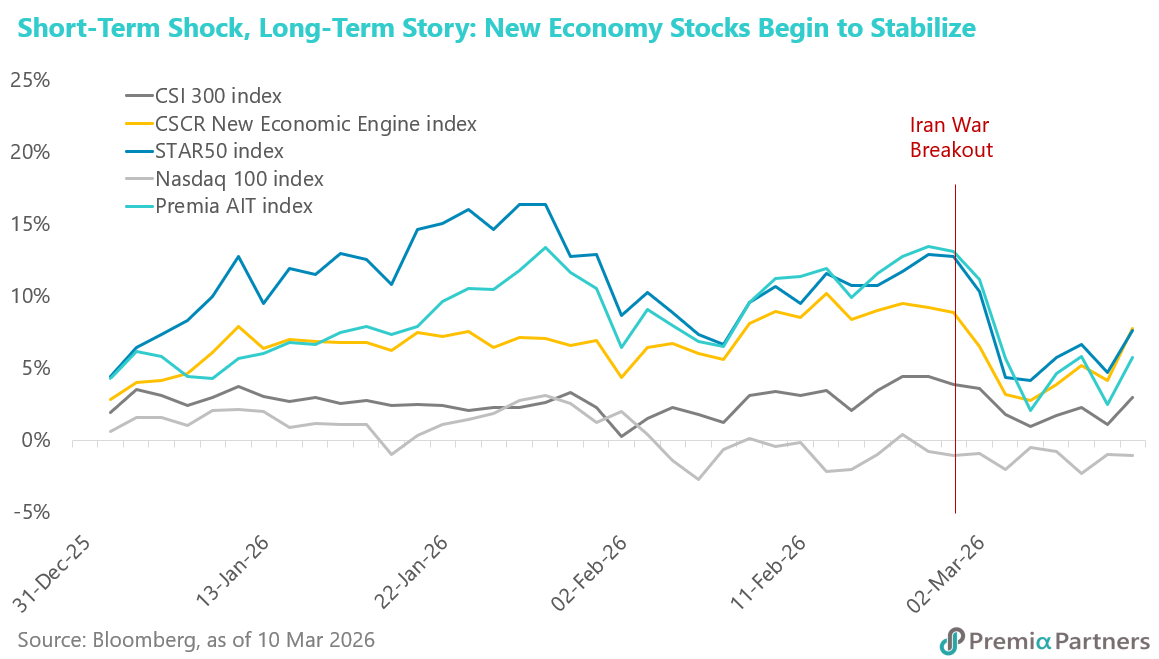
While Chinese new economy stocks have faced short-term volatility amid the geopolitical tensions, their long-term growth remains anchored by strategic policy and industry breakthroughs. The 15th Five Year Plan underlines that technology and self-sufficiency still come first, backed by a strong push for AI and digital infrastructure. The blueprint mentioned “AI“ more than 50 times and included major action plans to deploy AI agents and increase investment in quantum computing and 6G. On the hardware front, sources indicate SMIC (688981 CH) and other Huawei-linked chipmakers are aiming to ramp up production of 7nm or 5nm semiconductors to 100K wafers in 1-2 years to support domestic developers. This domestic ecosystem is already bearing fruit: Zhipu AI released its GLM-5 model with superior coding capabilities, notably confirming the model was developed using domestic chips from Huawei, Moore Threads, and Cambricon. On the software side, adoption is accelerating. OpenClaw has sparked a new trend pivoting from “Chat AI” to “Execution AI”, reminding investors of the DeepSeek moment in 2022. Chinese AI companies act swiftly to adopt the trend, making China a leader in consumer AI adoption. Multiple developers like Tencent and Xiaomi are linking OpenClaw to their models. Even before this new trend, local media have reported that Chinese AI models’ weekly token usage surpassed US peers, suggesting that monetization may arrive earlier than expected. Investors focused on hardware semiconductors could consider our Premia China STAR50 ETF. For broader exposure, our Premia CSI Caixin China New Economy ETF offers a diversified approach with investments in semiconductors, AI, EV, and Biotech, allowing investors to participate in China’s innovative growth story. For even broader Asia exposure, investors might consider our Premia Asia Innovative Technology and Metaverse Theme ETF, which invests in Asia's 50 largest innovative companies across sectors such as AI, semiconductors, solar energy, and EVs with equal weightings.
Mar 16, 2026