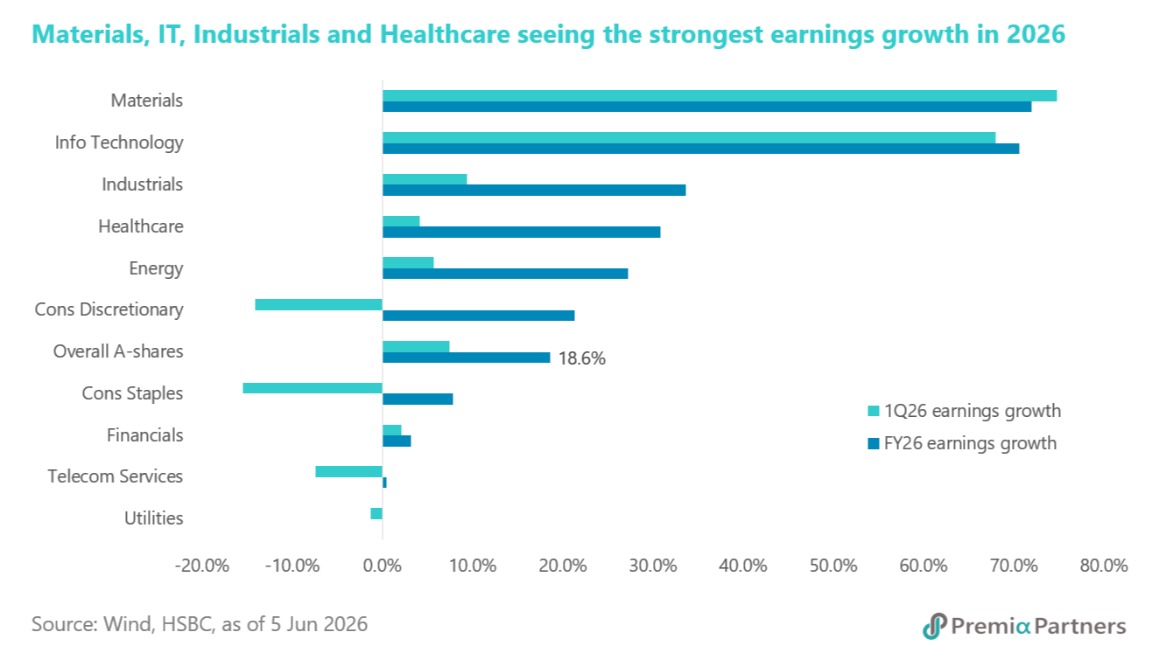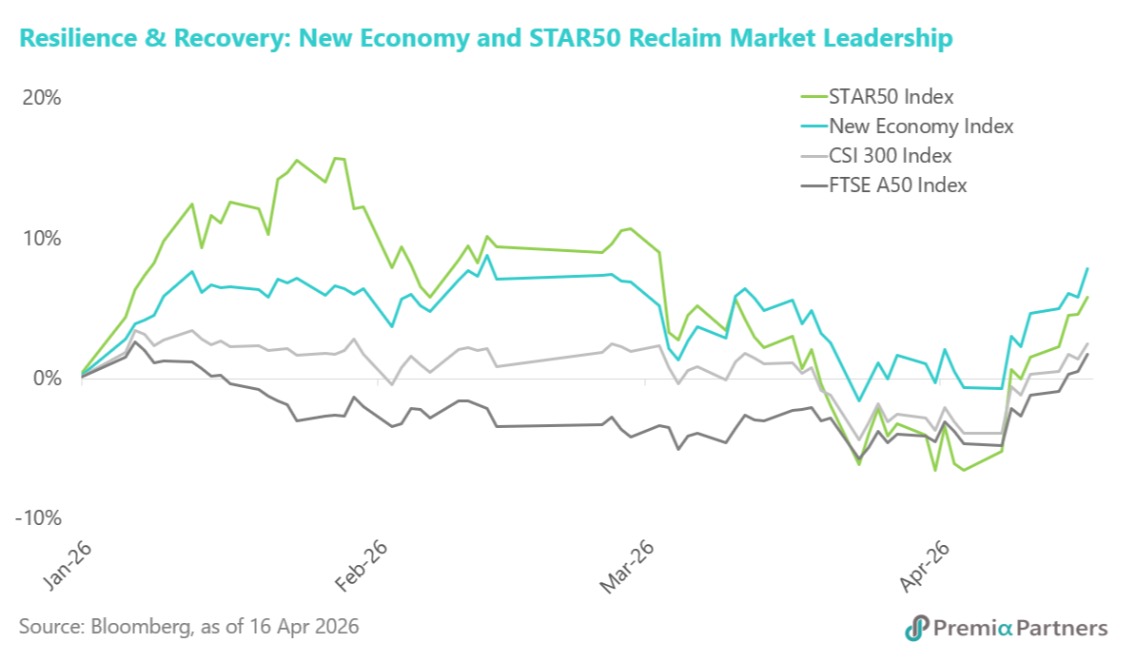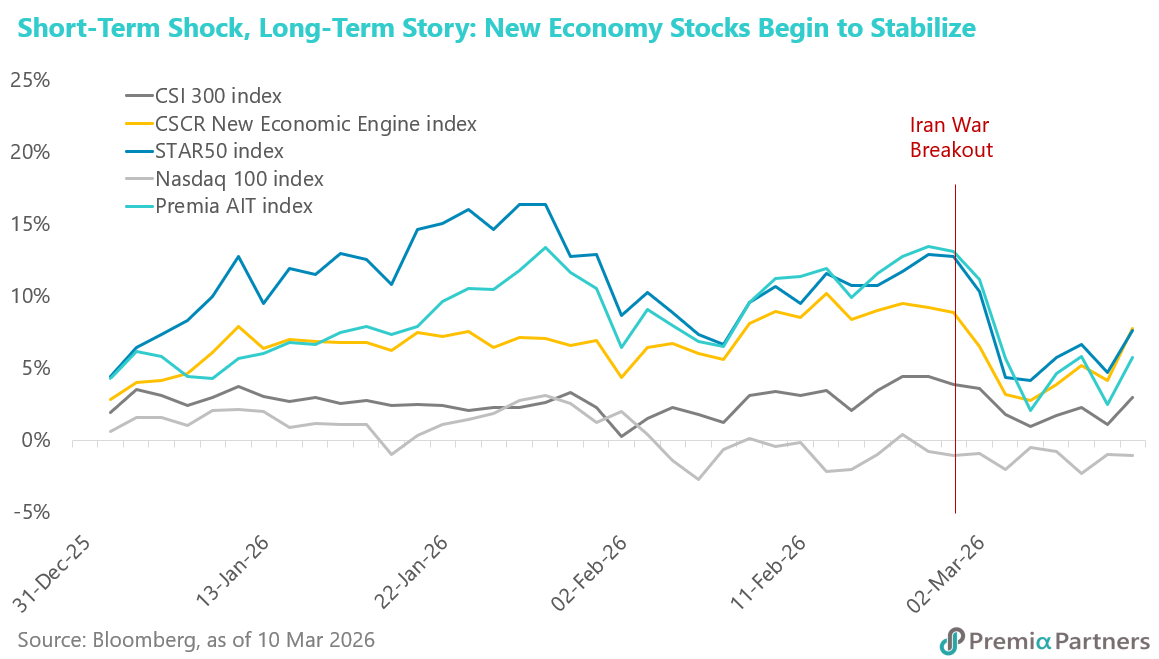
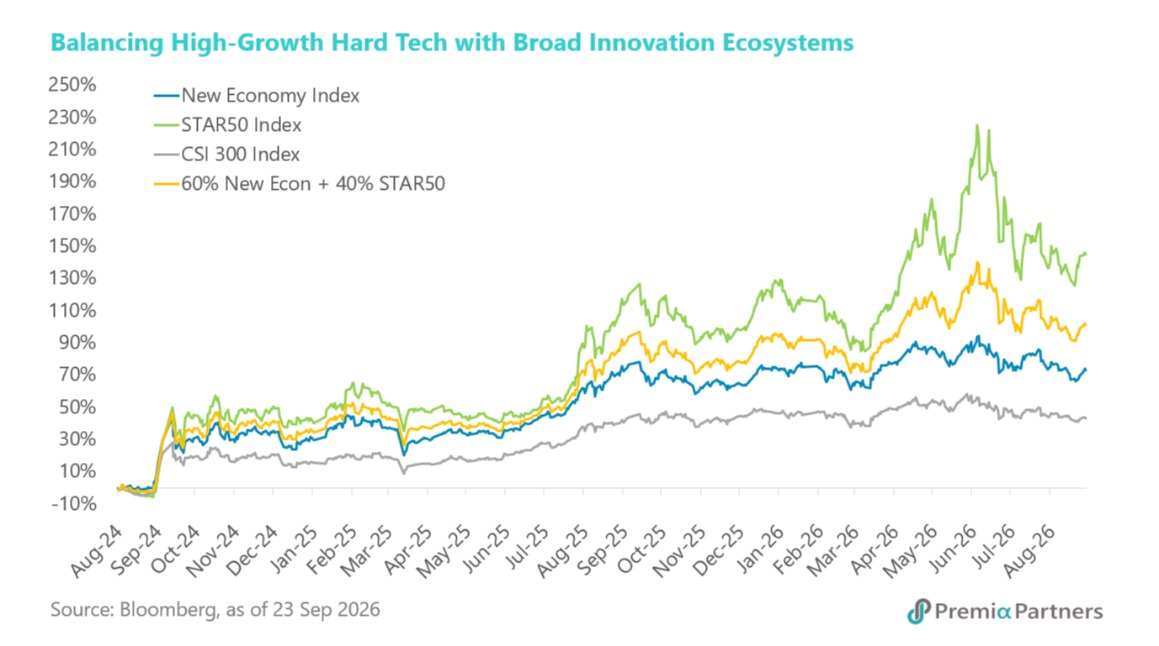
Following the release of the 15th Five-Year Plan outline in March, detailed sector-specific roadmaps are now emerging, placing “new quality productive forces” squarely at the center of China’s long-term growth engine. At the forefront is a strategic push for "full-chain breakthroughs in integrated circuits" and accelerated domestic replacement. This is supported by massive, coordinated infrastructure commitments: Shanghai and Beijing are aggressively targeting 100,000-card intelligent computing clusters, and the MIIT is mandating the adoption of domestic computing chips. Beyond semiconductors, the 15th Five-Year Plan is sparking a major repricing in Chinese healthcare. Citigroup recently highlighted the plan's core ambition: shifting China from scale-driven manufacturing to global, innovation-driven leadership by 2030, with specific support for AI drug discovery, gene editing, and high-end medical devices. Advances in the domestic AI industry will help the biotech sector achieve critical breakthroughs, which in turn will increase demand for AI infrastructure, creating a powerful positive feedback loop. While the long-term outlook for these strategic sectors is exceptionally bright, the sheer scale of the transition means focusing solely on individual stocks can yield suboptimal risk-adjusted returns. Under these circumstances, utilizing a broad-based ETF to form the core of an investment portfolio—supplemented by individual high-conviction themes—offers a more sustainable approach. Our Premia China STAR50 ETF provides direct, concentrated exposure to the semiconductor and hard-tech leaders building this national AI and space infrastructure. For broader, diversified access across China's entire innovation ecosystem—capturing the synergies between intelligent computing and the booming healthcare sector—consider the Premia China New Economy ETF.