Premia 观点洞察
精选观点 & Webinar

越南防疫佳绩有目共睹,政府自4月23日以来循序渐进地松绑封锁政策,尽管受全球疫情影响,其宏观数据仍不如预期。 越南政府于上周(5月15日)调整了原先设定的5%经济增长率目标,根据不同假设情境制订两个方案:若主要贸易伙伴的疫情在今年第三季得到控制,则增长目标为4.4%%-5.2%;若主要贸易伙伴的疫情迟至第四季才得到控制,则增长目标为3.6%%-4.4%。 越南目前的情况究竟为何? 是时候复苏了吗? 本篇文章我们将针对多方面进行简要更新。
May 17, 2020
Given the trade tensions and looming risks of de-globalisation, it is likely that China will embark on a different growth path in the aftermath of COVID, and increasingly rely on domestic demand to drive growth. This structural shift holds significant implications for EM Asia. In fact, ASEAN replaced the European Union as China’s biggest trading partner in 1Q20. And as a result of the increased tension and US protectionist measures targeting China, and pressure for MNCs to choose which one they side with under the pretext of protection against production disruptions in China, ASEAN and notably Vietnam are clear winners. But a more nuanced picture is closer to the truth. That is, the shifts in supply chains are more likely to be gradual than dramatic.
May 17, 2020
Yes, possibly. The different approaches taken by the US and China towards managing COVID-19 has likely set the stage for a widening of the growth differential between the two countries. Immediately, the earlier reopening of the Chinese economy means China’s GDP will still show a bit of growth this year. This compares to the controversial, tentative easing of restrictions in the US, only in May. Even if the US gradually normalizes from here, its GDP for will end 2020 with a big hole, which will take three to four years to fill. If China maintains its productivity growth, it should be able to manage a long-term average GDP growth rate of around 5.8% a year. Meanwhile, long-term US GDP growth from 2022 onwards could ease to 1.5% on lower investment/lower productivity growth. Taking into account IMF projected growth rates for 2020 and 2021, China could overtake the US in Dollar terms by 2029.
May 12, 2020
We previously highlighted the gaming industry just after the coronavirus outbreak in Account of an atypical, tech-enabled CNY holiday. With the COVID-19 pandemic raging on globally and people spend more time at home social distancing, the gaming industry has shown greater potential of booming opportunities. The large demographic base of tech-savvy and mobile-first youths born in the digital era provided a strong head start for China, especially in eSports.
May 10, 2020

即使是不玩游戏的人,也肯定会知道最近在全球大爆红的switch游戏动物森友会。事实上,电玩产业的规模非常巨大,市场规模已经超过10亿美元,受疫情影响,人们持续保持社交距离且居家时间拉长,电玩也成为大家排忧解闷的重要途径。截止2019年底,全球游戏市场收入已经超过1500亿美元,而其中45%来自智慧型手机和平板电脑上的手游。在电玩产业中,电子竞技,简称电竞,在过去十年已经发展成一个重要的专业行业。全球电子竞技收入估计在今年会超过10亿美元,而中国目前佔其中的20%。本期webinar,我们将与大家分享「社交距离」下的虚拟世界:中国的游戏、电竞和直播产业。
May 07, 2020
The COVID-19 pandemic has slowed down productivity and daily lives, stagnated the global supply chain, and affected financial market returns across almost all asset classes. In the first quarter of 2020, all markets around the world reported negative returns with varying degrees. While it seems that all is going the same direction, especially in the equities’ world, the fundamental risk factors were not. Among the fundamental factors we employ for China A shares, some has performed better than others amidst the market drawdown.
Apr 27, 2020
Premia CSI Caixin China New Economy ETF performed well and went up by 3% in a down market. In this article, we would like to share with you the reasons behind the strong performance and the comparison of this strategy with the other mainstream indexes that investors usually track in respect to performance attribution, sector allocation, niche thematic exposure and top drivers.
Apr 23, 2020
疫情冲击下,中国推出40万亿人民币的"新基建"计划振兴当前经济,"#新基建"因而频频炒上热搜榜,点燃市场广泛关注及业界讨论。 "新基建"到底为何? "新基建"概念股又该从何下手?
Apr 16, 2020
The market performance of gold in the midst of the COVID-19 crisis has left its fans a little puzzled. From a peak of USD 1703 on 9 March, it retreated to USD 1451 on 16 March - a 15% decline. Should one hold gold now, or rather park in cash tools? Our senior advisor Say Boon Lim demystifies in this piece.
Apr 13, 2020
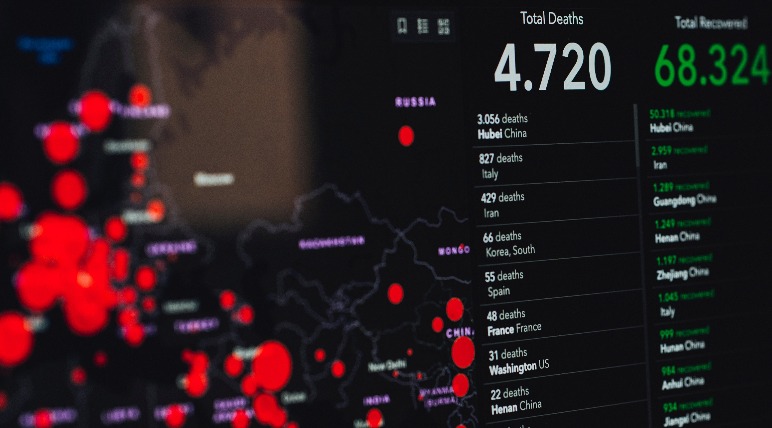
As global asset prices have slumped on the back of the COVID-19 outbreak, concerns have arisen from supply chain disruptions to about global recession and a liquidity crisis. In this webinar, David Lai and Larry Kwok would discuss the lessons learned from the GFC, share our observations of some pandemic-led trends and implications, and suggest a few related investment ideas.
Apr 12, 2020
Premia 图说

吴伟锋
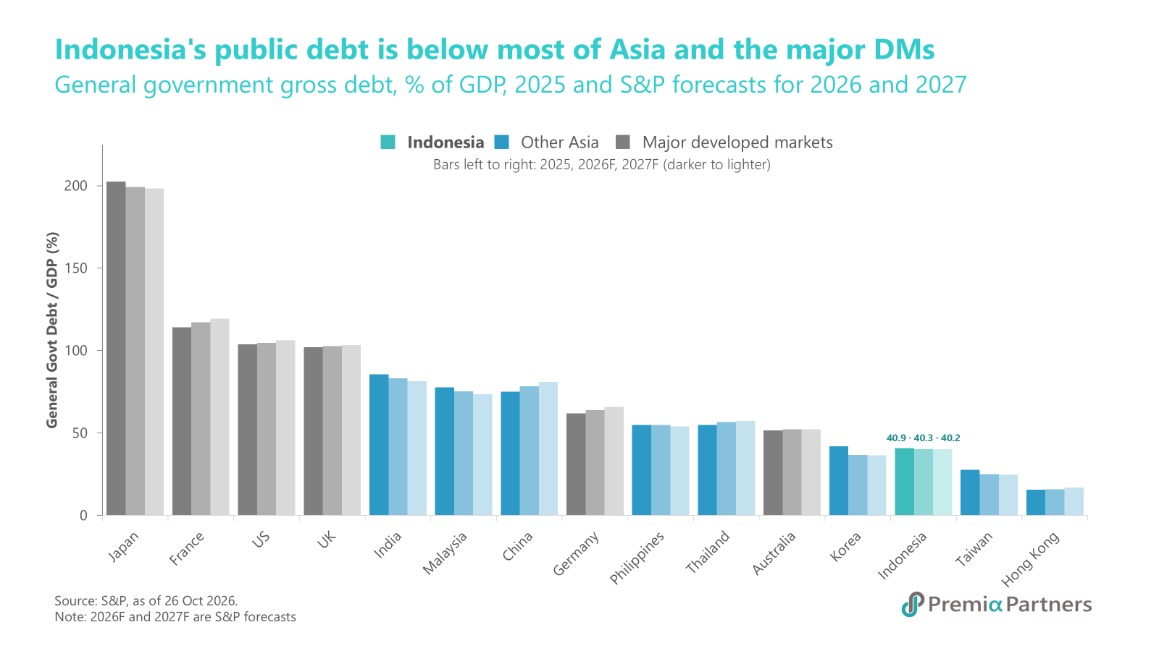
Indonesia's fiscal position is stronger than the recent sell-off implies. S&P puts general government debt at 40.9% of GDP in 2025, the third lowest of the 15 markets in the chart, and expects it to hold broadly steady at 40.3% in 2026 and 40.2% in 2027. That compares with a simple Asian average of 52.7% easing to 51.7%, and a major developed-market average of 106.0% rising to 107.6%. Japan, India, Malaysia and China all carry heavier debt loads.What rattled markets was an equity-market issue, not a fiscal one. On 15 October, MSCI proposed moving Indonesia from “Emerging Market“ to “Standalone Market“ status, citing opaque shareholding structures and suspected coordinated trading. Jakarta shares fell 11.6% in a single session, the steepest one-day drop since 1998. Indonesia government international bonds and sukuk, by contrast, barely flinched: five-year CDS widened from roughly 84–88bp in late September to around 100bp by 22 October, with part of that move predating MSCI's announcement and tracking higher US Treasury yields.Nothing has yet changed in Indonesia's index status. MSCI will consult until April 2027 and announce a final decision by 30 June 2027, leaving time for reform. Authorities have already moved, mandating a 15% minimum free float, requiring disclosure of 1% shareholdings and removing highly concentrated stocks from the JCI. Enforcement will decide the outcome, but if these measures stick, the episode could leave Indonesia with a more transparent and investable market than before.The Premia J.P. Morgan Asia Credit Investment Grade USD Bond ETF (3411 / 9411 HK) holds Indonesia as one exposure among many. The ETF spans 124 issuers across Asia ex-Japan, with Indonesia at roughly 15%: about 10% across Indonesian government bonds and sukuk, and 5% across quasi-sovereign and corporate names including Bank Mandiri, Freeport Indonesia, Indofood, Indonesia Asahan Aluminium, Minejesa Power, Pertamina and PT Perusahaan Listrik Negara - high-quality investment-grade issuers.
Oct 28, 2026